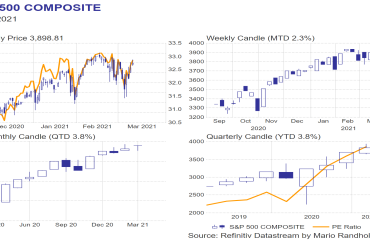
- Initial jobless claims were reported at 225,000, slightly higher than the expected 223,000 consensus.
- Despite the slight increase in claims, the overall jobless claims data does not indicate a weakening in the employment sector.
- Federal Reserve Chairman Powell noted weaknesses in the employment situation, using this as partial justification for a 50 basis points reduction in interest rates. Why? Is there something financial professionals might not readily see?
Given my view and commentary of the recent job data, I will be asking financial advisors about their views on: Send me a message if you would like to review the highlights of those recordings. https://www.linkedin.com/in/randholm/
A. Market Adaptation and Strategy: How has the firm’s investment strategy adapted to the recent changes in the job market, particularly with shifts towards remote work or changes in employment sectors?
B. Diversification Strategy: With the knowledge of current job market volatility, how does the firm recommend diversifying client portfolios to mitigate risks associated with employment sector fluctuations?
C. Economic Cycle Analysis:
Where are we in the economic cycle? Is this increase in jobless claims an early indicator of a slowdown or just a temporary fluctuation?
D. Interest Rate Impact:
How might the Fed’s decision to cut rates by 50 basis points affect various sectors of the economy, particularly those sensitive to interest rate changes like housing, automotive, and capital-intensive industries?
E. Fixed Income Considerations:
With interest rates being cut, should we revisit our bond portfolio’s duration strategy? Are there opportunities in fixed income or should we be wary of bond yields?
F. Long-term vs. Short-term:
Does this change our long-term investment thesis, or are these short-term movements that we should look past?
Taking into consideration my own trading systems and the JOB report as a leading indicator,…
Is the broader economic cycle weakening?
Do these jobless claims and Powell’s remarks signal the beginning of a slowdown in the broader economy? Should we consider rebalancing our exposure to cyclical vs. defensive stocks?