How Writing Sharpens My Trading Edge
After two decades navigating markets, I’ve found one truth stands out: the more I write, the better I trade. Observing investment legends—those whose words sway thousands of market participants—I’ve noticed a common thread. Their influence often stems from the clarity and discipline of their written work. It’s a lesson I’ve taken to heart.

For me, writing about the markets and their implications creates a deliberate pause—a temporal buffer absent in the haze of meditation or other pursuits. As my fingers strike the keys, thoughts settle into a structure unmatched by any other activity. It’s a process that crystallizes intent and exposes assumptions.
This habit proves especially potent for day trading, where split-second decisions meet relentless volatility. Here’s why it works:
- Clarifies Strategy: Writing transforms vague hunches into actionable plans. It forces me to understand that I can predict if the SPY is going to be up or down in the next 15 minutes. It curbs the emotional impulses and market noise that even seasoned investors can fall prey to.
- Tracks Patterns: A journal logging losing trades—entry rationale, outcome, and mindset—reveals what 20 years of experience confirms: success lies in recognizing repeatable edges and eliminating persistent errors.
- Tames Emotions: Greed and fear are old foes in this game. Documenting this state of mind before, during, and after trades uncovers triggers and acts as a release valve—keeping me steady when the stakes spike.
- Enforces Discipline: Rules on paper carry weight. Risk management is the only difference between those that are able to endure multiple decades.
- Deepens Insight: It sharpens my lens on the market from the micro level to a macro view. Hour by hour, day by day, session after session.
You’ve seen fads come and during multiple decades; writing and reading isn’t one. Writing’s value isn’t theoretical. It’s a practical tool, forged in the heat of those seeking answers and on those willing to guide the path to them. Born from the restless minds chasing market truth, it’s tempered by the steady hands of mentors who’ve weathered storms. But what if the act of writing reveals more than strategies—what if it unmasks the illusions we trade on? In its ink lies both a mirror and a map—daring us to see beyond the numbers.
On the other hand, I remember that the ultimate playing field is the trader’s track record—a brutal ledger that cuts through rhetoric. I recall your words: great market narrators often wield compelling tales yet harbor unimpressive performance, their ink outshining their returns. Isn’t it striking how the market cares little for eloquence when the numbers lay bare the truth?
To sum up, it’s how I am refining my edge in a world where margins are thin and clarity is king. I’d be curious to hear if you’ve found similar anchors in your own journey.
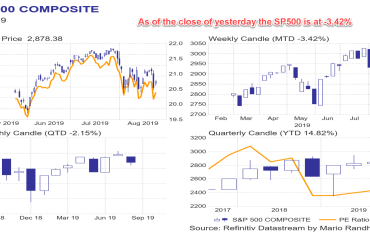
Yesterday the indexes turned negative for Feb. Here are key charts I review almost each day.
“Subscribe to my blog and social media.” Thanks for your comments and support!