SIGN IN YOUR ACCOUNT TO HAVE ACCESS TO DIFFERENT FEATURES

FORGOT YOUR PASSWORD?

FORGOT YOUR DETAILS?

AAH, WAIT, I REMEMBER NOW!

Mario Randholm

  • LOGIN
  • Daily “Rutina”
  • Hello, I’m Mario.
  • Blog
  • Resources
    • Downloads
    • Partners
      • NinjaTrader
      • IBKR Podcast (Interview)
      • LSEC (Refinitiv)
      • MultiCharts
      • Municipalidad de Miraflores
      • TradingDiary Pro
    • Mario Randholm (Bio)
    • R Option Model
    • Join Discord
    • Comparison Matrix
  • FAQ
    • Term of Service
  • My Role
Contact Us
randholm
April 25, 2025 7:41 am / Published in Market Update

Market Outlook: U.S.-China Trade Scenarios and Investment Strategies

Following significant market volatility and a period of reflection, it is now clearer that the current situation extends beyond what some blamed to tariffs alone—it concerns the future of the U.S.-China relationship.
Apple has confirmed it is relocating parts of its business to India. I wonder if the company considered any locations in Latin America for this shift.

I have analyzed the potential economic and market implications of the U.S.-China trade negotiations, focusing on two distinct scenarios driven by the decisions of Presidents Xi and Trump. These outcomes carry significant long-term consequences for the U.S. economy, global markets, and portfolio positioning.

Scenario 1: President Xi’s Prediction Proves Correct
If President Xi’s assessment is accurate and President Trump de-escalates trade tensions to preserve political capital, I anticipate a bearish long-term outlook for the U.S. economy and equity markets. This perceived retreat could erode investor confidence and weaken U.S. economic credibility. In this scenario, my strategy can be sum up:

  1. Emphasize short-term, opportunistic trades to navigate heightened market volatility.
  2. Shift capital toward defensive assets such as gold, U.S. Treasuries, and other low-risk instruments to mitigate downside risk.
  3. Increase exposure to non-U.S. markets to hedge against domestic economic challenges.
  4. Selectively invest in Chinese stocks, which may benefit from favorable trade outcomes and supportive domestic policies.

In this scenario, which, based on Ray Dalio’s work, appears inevitable in the very long-term, momentum-driven investors are likely to react impulsively, fueling an aggressive but short-lived equity market rally. My approach would be to capitalize on this surge through tactical trades, exiting positions when technical indicators signal exhaustion.

Scenario 2: President Trump Remains Resolute
If President Trump maintains a firm stance, I foresee short-term economic disruption but a bullish long-term outlook for the U.S. economy and stock market. After navigating initial challenges, a period of sustained growth is likely, fueled by strengthened domestic industries and robust investor confidence. In this scenario, my strategy can be sum up:

  1. Allocate capital to high-quality U.S. equities with strong fundamentals to capture long-term growth.
  2. Shift focus from short-term speculation to durable, growth-oriented positions.
  3. Scale back allocations to defensive assets as market conditions stabilize.
  4. Concentrate portfolios on U.S. markets to maximize exposure to domestic economic strength.

China’s Economic Vulnerabilities
Despite President Xi’s formidable influence, China faces structural challenges that could limit its economic maneuverability. Rising national debt, declining consumer confidence, and approximately 20 million workers in export-dependent factories underscore vulnerabilities, particularly in the context of U.S.-centric trade flows. These factors may constrain China’s ability to fully leverage any U.S. policy shifts. Not incorporating the long-term consequences of the one-child policy.

Conclusion
My current view emphasizes adaptability in response to the evolving U.S.-China trade landscape. Investors should closely monitor developments and align portfolios with these scenario-based strategies to optimize risk-adjusted returns. For tailored guidance, please contact me directly.

Here are the asset return as the close of the April 22!

Asset Retuns pic.twitter.com/BcXeczP8XZ

— Mario Randholm (@MarioRandholm) April 23, 2025

http://bit.ly/Terms10

“Subscribe to my blog and social media.” Thanks for your comments and support!
What you can read next

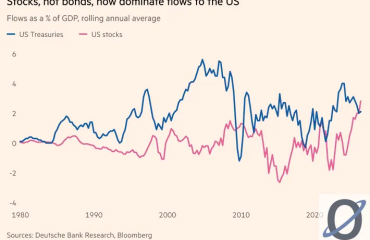
The Dollar Is Starting to Depend More on Wall Street Than on Treasuries
News
Trading higher after a strong open

Any questions about this post?Cancel reply

This site uses Akismet to reduce spam. Learn how your comment data is processed.

Join the Free Newsletter
Bold conversations, dive into idea clash with exclusive insights

Únete Gratis
Conversaciones audaces donde se permite el choque de ideas y perspectivas exclusivas

This field is required.

Check your inbox or spam folder to confirm your subscription.

Categories

Twitter

Lightning fast alerts:

twitter.com/MarioRandholm

twitter.com/RandBots

Archives

Privacy & Cookies: This site uses cookies. By continuing to use this website, you agree to their use.

To find out more, including how to control cookies, see here: Cookie Policy

ABOUT US

Mario Randholm Blog. Mario is the founder of Randholm & Co. S.A.C., an investment management company dedicated to producing superior returns for its clients and employees by adhering to mathematical and statistical methods.

CONTACT US

Message us

Mario's Linkedin

Disclaimer:

Risk Disclosure: Futures and forex trading contains substantial risk and is not for every investor. An investor could potentially lose all or more than the initial investment. Risk capital is money that can be lost without jeopardizing ones’ financial security or life style. Only risk capital should be used for trading and only those with sufficient risk capital should consider trading. Past performance is not necessarily indicative of future results.

Hypothetical Performance Disclosure: Hypothetical performance results have many inherent limitations, some of which are described below. No representation is being made that any account will or is likely to achieve profits or losses similar to those shown; in fact, there are frequently sharp differences between hypothetical performance results and the actual results subsequently achieved by any particular trading program. One of the limitations of hypothetical performance results is that they are generally prepared with the benefit of hindsight. In addition, hypothetical trading does not involve financial risk, and no hypothetical trading record can completely account for the impact of financial risk of actual trading. for example, the ability to withstand losses or to adhere to a particular trading program in spite of trading losses are material points which can also adversely affect actual trading results. There are numerous other factors related to the markets in general or to the implementation of any specific trading program which cannot be fully accounted for in the preparation of hypothetical performance results and all which can adversely affect trading results.

Testimonials Disclosure: Testimonials appearing on this website may not be representative of other clients or customers and is not a guarantee of future performance or success.

Disclaimer:

This site is for informational purposes only. Nothing on this site should be considered investment advice or as a solicitation to buy or sell any security.

Past performance is no guarantee of future results.

Please see our full Disclaimer.

TOP
“It requires a great deal of boldness and a great deal of caution to make a great fortune; and when you have got it, it requires ten times as much wit to keep it. – Nathan Mayer Rothschild.”
+ +
Loading Comments...